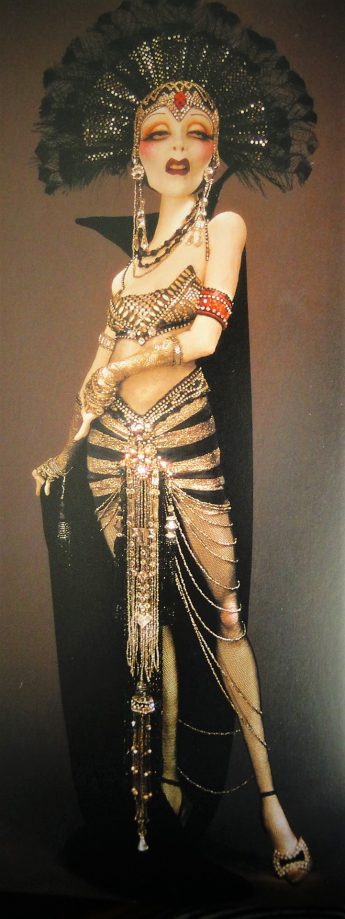
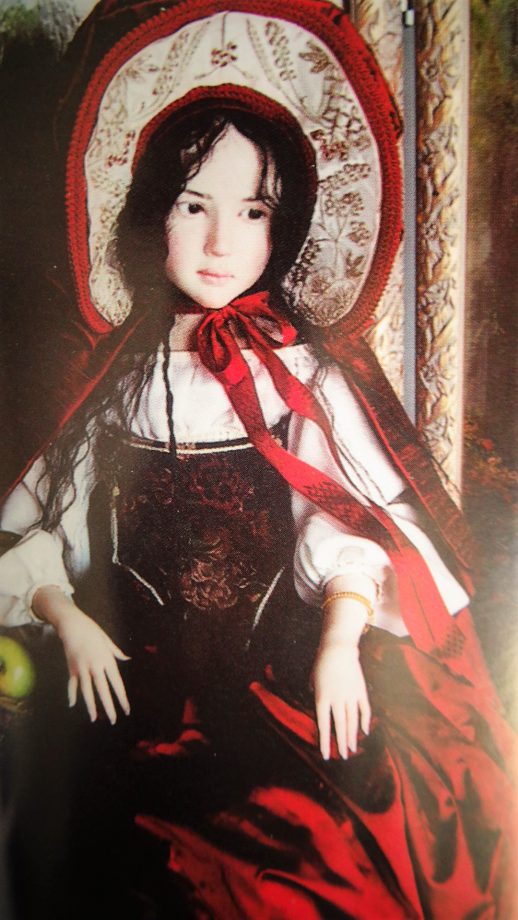
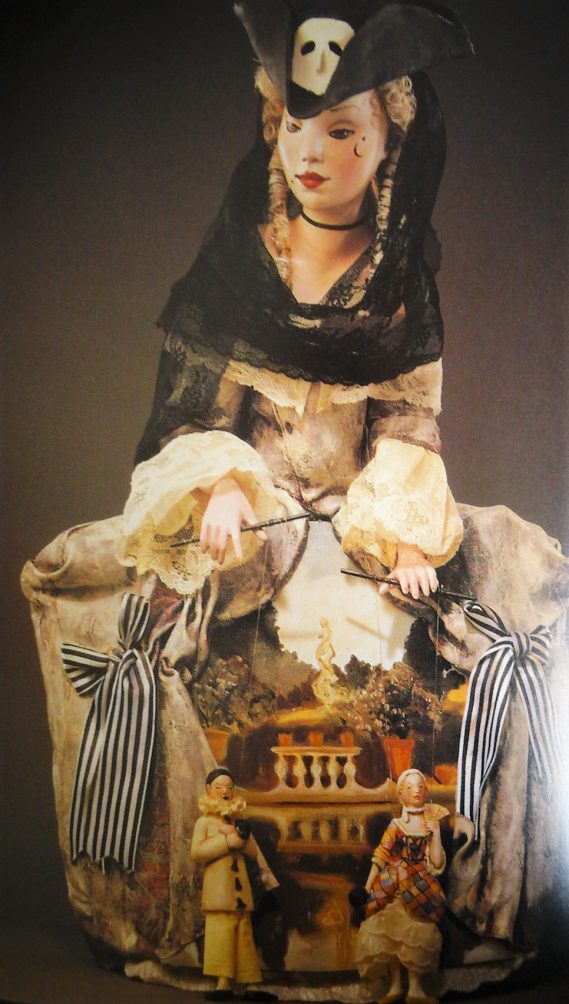
Doll #1-Delilah by Van Craig, Doll #2-Red Ridinghood by Jamie Williamson , Doll #3-Carnivale by Nancy Wiley
*All pictures are from The Doll by Contemporary Artists by Krystyna Poray Goddu & Wendy Lavitt
Hello! Here is the final part of Dolls created by artists. The main cause that pushed women to create their dolls and to persevere were endless. First of all, there was the two World Wars, which transformed the doll industry. During these two wars, several women and girls lost their pretty dolls. The World War II generation is limited in dolls and choice. Germany had to be rebuilt, basic needs, including first materials had to be streamlined for survival. Some mothers, faced with the desolation of their children, were quite creative, in making dolls for them with a primitive appearance. After the war, life resumed its course and a new economic era began. This confidence in the future brings Käthe Kruse to create her own company.
Several women in the post-war period preserved the nostalgia of their childhood dolls and a new movement appeared, the world of doll collecting. Dolls of the pre-war demand was so strong that several new companies were created. The Germans developed moulds and copies of old dolls for collectors wishing to reproduce their own doll.
Along with this new artistic reality, a new form of doll was born, the fairy and fantastic dolls: fairies, witches, elves, dwarfs, princesses, goddesses, …The excitement that reigns during the 1950s, gives hope and encourages more to join this new current. Many women see it as a way to create, but also to express their dreams, desires and hopes. Although the road was long and arduous, it is with passion, perseverance and hard work, that many around the world, particularly European and American women were interested in carrying out and producing their own dolls and making a career.
A few years after the second world war, a very important movement was born, the birth of the doll associations. The UFDC (United Federation of Doll Clubs), was one of the first associations in the United States. It’s first mission was to preserve the history and richness of dolls regardless of their origins. In 1963, it was the turn of NIADA (National Institute of American Doll Artist) to set up an association which would help out all the doll artisans from around the planet. The goal is to promote and bring together the creations of unique dolls made by artists.
During the 1960s, 70s and 80s, Germany had one of the largest schools in the manufacturing and marketing of artist Dolls. Several courses, seminars, fairs, exhibitions and conventions emerged and allowed several craftsmen to inform the general public of their work, success, experiences and the same day to day challenges that they faced.
The end!
*All pictures are from The Doll by Contemporary Artists by Krystyna Poray Goddu & Wendy Lavitt
Allô! Voici la dernière partie des Poupées créées par des Artistes. Les causes principales qui poussèrent les femmes à créer leurs poupées et à persévérer sont multiples. Premièrement, il y eu les deux guerres mondiales, ce qui bouscula l’industrie de la poupée. Lors de ces deux guerres, plusieurs femmes et fillettes perdent leurs jolies poupées. La génération de la deuxième guerre mondiale est limitée en matière de poupée et de choix. Le pays, l’Allemagne, devait-être reconstruit, les demandes de base, dont les matières premières devaient-être rationalisées pour la survie. Quelques mères de famille, devant cette désolation de leurs enfants furent assez créatives pour leurs créer des poupées aux allures primitives. Après la guerre, la vie repris son cours et un nouvel air économique commençait. Cette confiance vers l’avenir amène Kathë Kruse à créer sa propre compagnie.
Plusieurs femmes de l’après-guerre conservèrent la nostalgie de leur poupée d’enfance et un nouveau mouvement fait son apparition, celui du monde des collectionneurs. La demande des poupées de l’avant-guerre était si forte que plusieurs nouvelles compagnies voient le jour. L’Allemagne développa des moules et des copies d’anciennes poupées pour les collectionneurs désirant reproduire leur propre poupée.
Parallèlement à cette nouvelle réalité artistique, une nouvelle forme de poupée voit le jour, celle des poupées féériques et fantastiques : fées, sorcières, elfes, nains, princesses, divinités, etc. La fébrilité qui règne au cours des années cinquante, donne espoirs et incite plusieurs à se joindre à ce nouveau courant. Plusieurs femmes y voient une façon de créer, mais aussi d’exprimer leurs rêves, leurs désirs et leurs espoirs. Bien que la route fût longue et ardue, c’est avec passion, persévérance et acharnement que plusieurs femmes à travers le monde et plus particulièrement européennes et américaines furent intéressées à réaliser et produire leur propres poupée et en faire carrière.
Quelques années après la deuxième guerre mondiale, un mouvement très important voit le jour, la naissance des associations de poupée. L’UFDC (United Federation of Doll Clubs), fut l’une des toutes premières associations de poupée aux États-Unis. Sa mission première était de préserver l’histoire et la richesse des poupées peut importes leurs origines. En 1963, ce fut le tour de NIADA (National Institute of American Doll Artist) de mettre sur pied une association qui viendrait en aide à tous les artisans en poupée à travers la planète. Le but premier est de faire la promotion et de rassembler les créations d’artistes en poupée unique.
Au cours des années 60, 70 et 80 l’Allemagne fut l’une des plus grandes écoles dans la fabrication et la promotion de poupée d’artiste. Plusieurs cours, séminaires, salons, expositions et conventions voient le jour et permettent à plusieurs artisans d’informer le grand public de leur travail, de leurs succès, leurs expériences et mêmes des défis qu’ils doivent faire face à tous les jours.
La conclusion!

 ATELIER MISS GEORGIA DOLL
You must be logged in to post a comment.